Why Confidence Has Become the LNG Industry’s Most Critical Asset
The Scale of LNG and the Weight of Decisions
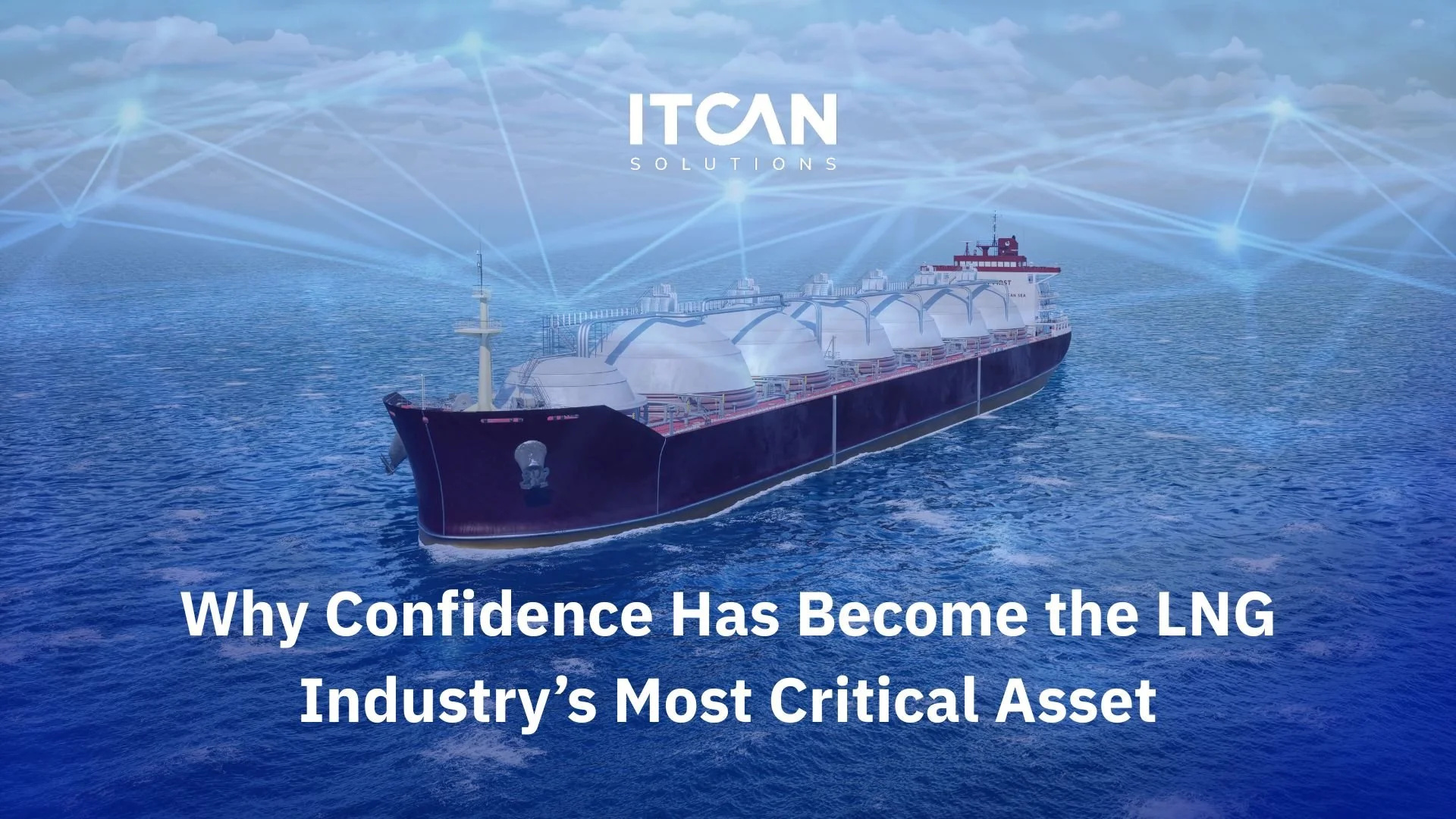
The LNG industry powers economies, enables industrial growth, and plays a critical role in global energy security. Its scale is unmatched, and so is the responsibility that comes with it. Every decision made across the LNG value chain influences safety, compliance, operational reliability, and long-term performance.
As projects become larger and operations more complex, teams are under increasing pressure to act quickly while maintaining absolute precision. In this environment, confidence is no longer a soft attribute, it is a prerequisite. Decisions cannot rely on assumptions, fragmented views, or incomplete context yet this is still the reality many industries face today.
Partial Truth: The Hidden Risk in LNG Operations
Across the LNG industry, engineering information is rarely found in one place. Drawings, documents, asset data, and historical records are often spread across multiple systems, folders, and handover packages. Each source offers part of the story, but rarely the full picture.
This fragmentation creates what can be described as partial truth. Teams are forced to assemble context manually, validate data repeatedly, and make decisions without complete visibility. While operations may continue, risk quietly accumulates. In an industry where margins for error are minimal, partial truth becomes a liability impacting safety, efficiency, and decision-making confidence.
Leading LNG organizations are increasingly recognizing that achieving the full picture requires more than access to information, it requires engineered confidence built on trusted data, clear context, and systems that consistently support decisions across the asset lifecycle. Experience remains invaluable, but on its own, it is no longer sufficient in environments defined by scale, complexity, and risk.
Where Confidence Is Tested: Safety and Decision Pace
How confident can teams really be if they’re expected to plan work in environments they can’t fully interpret ahead of time? LNG facilities are dense, interconnected, and inherently high-risk. When understanding is limited to static drawings and document sets, critical spatial relationships are left to interpretation, creating blind spots long before anyone steps onsite.
The most effective approach is one that allows teams to understand the site before they experience it.
This is where intelligent 3D implementation changes the way safety is addressed.
By working within a virtual representation of the site, teams can analyze asset interactions, understand spatial constraints, and identify hazardous areas with far greater clarity.
As a result, safety planning becomes proactive rather than reactive, and onsite exposure is reduced through better-informed preparation.
The same principle applies to how decisions are made. When engineering and asset information are dispersed, decision-making becomes an exercise in validation rather than action. Engineers spend valuable time verifying accuracy instead of evaluating options, increasing uncertainty at critical moments; What should be a clear path forward turns into hesitation, rework, or delay.
Bringing information into a single, coherent operational context changes this entirely. When data is aligned, traceable, and consistently available, teams can move from questioning their inputs to trusting them. Decisions become faster not because they are rushed, but because they are supported by clarity, and that’s what we bring to the table.
Engineering Confidence into LNG Operations
At ITCAN Solutions, we help LNG enterprises establish a trusted digital foundation by structuring engineering data, enabling intelligent 3D visualization, and implementing unified data hubs. This approach transforms fragmented information into usable engineering intelligence, supporting safer planning, faster decisions, and greater operational confidence across the asset lifecycle.
As conversations continue across the industry, one message is becoming clear: in an industry this powerful, confidence is not optional. It is a competitive advantage.
Related Blogs